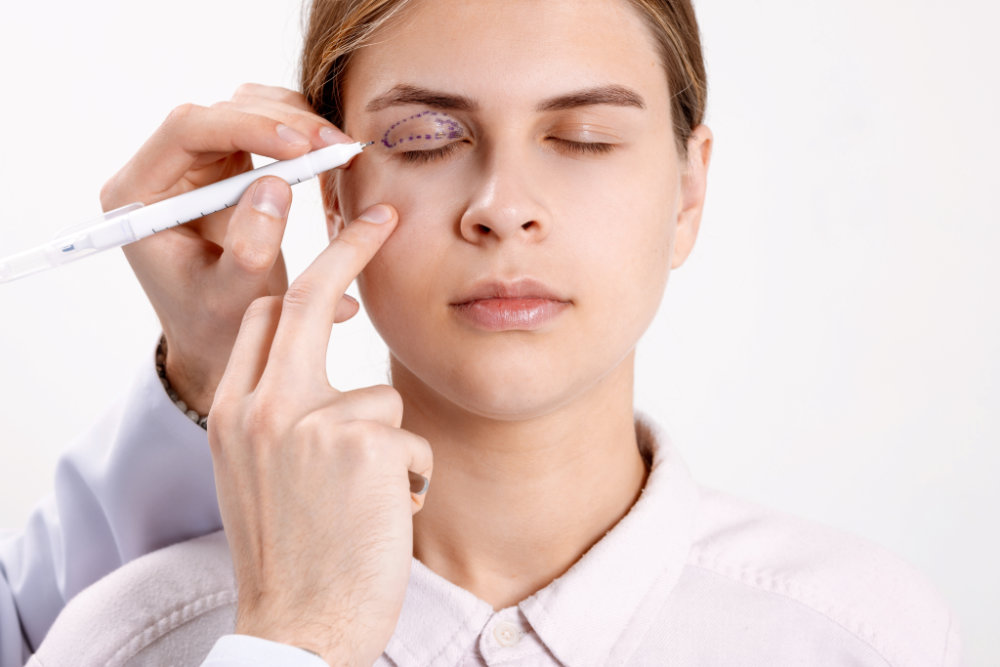
If you have people constantly telling you that you look tired when you’re not, you may benefit from eyelid lift surgery, also known as Blepharoplasty. At Nuance Cosmetic Surgery, we offer a variety of skin rejuvenation treatments and procedures that will improve your self-esteem and carry long-lasting results.
Contact us today at our Folsom office to schedule an appointment with our board-certified plastic surgeon, Dr. Kenneth Sumida, who will create a customized surgical plan for you based on your cosmetic expectations while also executing a natural, non-exaggerated look.
What is Blepharoplasty?
A corrective procedure used to alleviate droopy or puffy eyelids, Blepharoplasty can be performed on both lower and upper eyelids to achieve a more rested, youthful look. This surgery is used to remove excess skin and fat and lift remaining tissues.
What Blepharoplasty Can Treat
A blepharoplasty can treat:
- Sagging, loose skin that creates folds and can impair the functionality of the upper eyelid, sometimes to the point of impairing vision
- A puffy appearance of the eyes in the form of fatty deposits
- The presence of bags underneath the eyes
- Drooping lower eyelids
- Fine lines and excess skin of the lower eyelid
Can Blepharoplasty Improve Vision?
Depending on the severity of the drooping or loose skin, some patients may experience a widened visual field after this procedure.
When upper eyelid skin hangs over the lash line, it can block peripheral and upper vision. Patients often describe having to tilt their head back or lift the eyelid manually to read or drive. In these cases, blepharoplasty becomes a functional procedure, and some insurance plans may cover part of the cost. At Nuance Cosmetic Surgery, Dr. Sumida evaluates both the cosmetic and functional aspects of eyelid drooping during your consultation.
Types of Blepharoplasty
Upper Eyelid Surgery
Upper blepharoplasty addresses the skin and tissue above the eye. With age, thin upper eyelid skin stretches while supporting muscles weaken. Excess skin is removed or repositioned through an incision hidden within the eyelid’s natural fold.
Lower Eyelid Surgery
Lower blepharoplasty is used for the area beneath the eye where puffiness and loose skin develop. Fat pads can move forward with age and create prominent bags, no matter how much rest you get. The procedure repositions or removes displaced fat and tightens surrounding skin. In some cases, fat is redistributed into the tear trough (the hollow between the lower lid and cheek) rather than removed.
Functional Blepharoplasty
When sagging upper eyelid skin physically obstructs your line of sight, the procedure is classified as functional. The techniques used are similar to those of cosmetic upper blepharoplasty, but the goal shifts to restoring peripheral vision. Patients may undergo a visual field exam during the consultation process. Often, cosmetic and functional concerns can be treated at the same time.
Are You a Good Candidate for Blepharoplasty?
Most patients are 35 and older, though younger adults with a genetic predisposition to puffy or hooded eyelids may also qualify. Good overall health matters because conditions like uncontrolled diabetes or clotting disorders can complicate healing. Those with dry eye syndrome should mention it, as the procedure can temporarily reduce tear production.
Blepharoplasty refreshes the eye area but will not eliminate crow’s feet or lift sagging eyebrows. If brow drooping contributes to upper lid heaviness, Dr. Sumida may recommend other types of facial surgery alongside or instead of eyelid surgery.
Signs You May Benefit From Blepharoplasty Surgery
- Upper Eyelid Skin Rests on Your Lashes: Excess skin folding onto the lash line weighs down the eyelid and makes applying eye makeup difficult.
- You Raise Your Eyebrows to See Clearly: Subconsciously lifting your brows to compensate for drooping lids can strain the forehead and deepen wrinkles.
- Under-Eye Bags Persist Regardless of Rest: Puffiness from displaced fat pads does not respond to sleep or creams because the cause is structural.
- Hooded Eyelids Run in Your Family: Genetics strongly influence eyelid structure, so a family history of heavy lids may mean you will have the same early changes.
Before Your Blepharoplasty
Consultation
During your first visit to our Folsom office, Dr. Sumida will examine your skin’s elasticity and see how muscle tone and fat distribution around your eyes are affecting their shape and appearance. He will review your medical history, discussing everything from health conditions to current medications and supplements. With this information, he will be able to tell you if you are a good candidate for blepharoplasty and recommend a specific technique.
Once he has confirmed that this surgery is suitable for you, you will have photographs taken from different angles for planning purposes and to provide a comparison for after the surgery.
Preparing at Home
Before your surgery, you will have some preparations to make at home to simplify your recovery. Stop taking any medications that Dr. Sumida has advised stopping. If you smoke, you will also need to quit several weeks in advance. Make preparations at work to take time off and arrange for someone to drive you home from the surgery and stay with you for the first 24-48 hours. You can also stock your recovery area with cold compresses and lubricating eye drops and pick up any prescriptions.
The Day of Your Surgery
On the day of your surgery, follow any instructions your surgeon has given you about eating and drinking. Arrive with a clean face that is free from products and wear loose clothing that buttons or zips in front for easy removal. Once you arrive, Dr. Sumida will review the surgical plan with you again and mark the area.
What to Expect During the Blepharoplasty Procedure
Anesthesia Options
Eyelid lifts are typically outpatient procedures performed under local anesthesia, but general anesthesia may be necessary if your eyelid lift is performed in conjunction with other procedures.
Blepharoplasty Incision Options
- Upper Eyelid Incision: Follows the natural crease of the upper eyelid and becomes nearly invisible once healed.
- Lower Eyelid External Incision: Placed just below the lash line for access to excess skin and fat. The scar fades to blend with the skin beneath the lashes.
- Transconjunctival Incision: Made on the inner surface of the lower eyelid, leaving no visible external scar. Used when fat repositioning is the main goal.
Surgery Longevity
Upper or lower blepharoplasty alone takes one to two hours. Addressing both lids together can extend the time you spend in surgery. After the surgery, you can return home as soon as Dr. Sumida clears you.
What is the Recovery Process Like?
After a Blepharoplasty surgery, temporary swelling and bruising are typical. After 7-10 days, this will subside and the patient will able to resume normal daily activities in 10-14 days. The use of eye makeup to conceal bruising is permitted within 5 days after surgery, and contacts may be worn up to 3 days.
Once your face completely heals, the typical result is a smoother, more defined eye area with an alert, rejuvenated eye area. The results are long-term, but it may take up to a year for the incision lines to fully fade.
Doctor Sumida and the Nuance medical team will be available to you after your surgery to monitor your healing and progress, and you will also be advised on aftercare for your incision sites to reduce the risk of infection and complications. During your consultation, you will be made aware of the risks and side and effects that can be associated with a Blepharoplasty surgery.
Here at Nuance Cosmetic Surgery, we want you to look confident, feel confident, and be confident. Contact us today to set up your blepharoplasty consultation and get on track to younger, healthier-looking skin.
Tips for a Smooth Blepharoplasty Recovery
- Keep Your Head Elevated While Sleeping: To do this, prop your head on two or three pillows. Continue doing this for the first week to help fluid drain from the surgical area, or until your surgeon says you can lie flat again.
- Use Cold Compresses to Manage Swelling: Apply gently over closed eyes during the first 48 hours, 10 to 15 minutes at a time with a cloth barrier between the compress and your skin.
- Protect Your Eyes from Sun Exposure: UV radiation can permanently darken healing scars. Wear wraparound sunglasses outdoors and apply SPF once incision sites have closed.
- Avoid Screens and Reading for the First Few Days: Extended screen time reduces blinking, which can dry out sensitive eyes. Audiobooks and podcasts are a good alternative.
- Do Not Rub or Touch the Incision Sites: Rubbing can disrupt sutures and introduce bacteria. If itching occurs, a cool compress provides relief without direct contact.
- Attend All Follow-Up Appointments: Dr. Sumida monitors healing, removes non-dissolvable sutures and checks for early signs of complications.
What Factors Can Affect the Longevity of Blepharoplasty Results?
Genetics and lifestyle are the biggest factors that impact the longevity of blepharoplasty results. The skin will continue to age, just as it would without the surgery, which can lead to more laxity over the course of several years. Sun exposure can accelerate collagen breakdown in the thin eyelid skin. You can maintain your results with a good skin care routine and include ingredients like retinoids and sunscreen to keep the skin healthy and firm. Significant weight fluctuations can alter fat distribution around the eyelids, so we recommend staying at a consistent weight.
Blepharoplasty vs. Other Procedures
Blepharoplasty vs. Brow Lift
A drooping brow can sometimes push skin onto the upper eyelid and mimic the effect of excess eyelid skin. Sometimes, a brow lift is better able to address the root cause, which is why Dr. Sumida will spend time assessing your concerns to find the right procedure for you. Some patients may benefit from both procedures.
Blepharoplasty vs. Facelift
A facelift is used for excess skin and sagging in the jawline, cheeks and neck but does not address the eyelids. Patients noticing aging across the full face can pair blepharoplasty with a facelift for balanced rejuvenation in one session.
Blepharoplasty vs. Dermal Fillers
Dermal fillers can temporarily improve under-eye hollowing by adding volume, but do not remove skin or reposition fat. Results typically last 6 to 18 months. Blepharoplasty provides a longer-lasting correction for moderate to significant laxity or fat herniation.
Risks and Considerations of Blepharoplasty
It is common to experience temporary dry eyes, light sensitivity, blurry vision and double vision in the first days after your blepharoplasty. This type of temporary disruption can be caused by swelling and the use of prescribed ointments. These will be mild and often resolve within a week. In rare cases, more severe side effects can occur. During your consultation, you will be made aware of the risks and side effects that can be associated with a blepharoplasty surgery.
Frequently Asked Questions About Blepharoplasty
How long does blepharoplasty last?
Blepharoplasty results can last anywhere from 5 to 15 years, or even longer. Depending on the patient and their genetics, the results can even last a lifetime. Some patients choose to have a touch-up after several years if skin laxity has caused changes.
Does blepharoplasty leave scars?
Scarring is minimal and well-hidden. Because the incisions are placed within the eyelid crease or just below the lash line, they blend in with the natural lines of the eyelids. Transconjunctival lower lid incisions leave no external scar at all.
How much does blepharoplasty cost?
Cost depends on whether upper, lower or combined surgery is performed. During your consultation at Nuance Cosmetic Surgery, you will receive a detailed estimate covering surgeon, facility and anesthesia fees. Functional cases may qualify for partial insurance coverage.
How painful is blepharoplasty?
Most patients describe the discomfort as mild tightness or soreness. Over-the-counter or prescribed medication will help you tolerate this discomfort, which usually peaks within 24 to 48 hours and then gets gradually better.
Why Choose Nuance Cosmetic Surgery for Blepharoplasty
About Dr. Kenneth Sumida
Dr. Kenneth Sumida is board-certified by the American Board of Plastic Surgery and has practiced in Folsom and greater Sacramento for over two decades. He trained in general surgery at the University of Hawaii and plastic surgery at UC Davis Medical Center. He has also been recognized by Style Magazine readers as Favorite Plastic Surgeon, and his approach centers on natural-looking results and patient education.
Our AAAASF-Certified Surgery Center in Folsom
Nuance Cosmetic Surgery operates an AAAASF-certified facility, voluntarily meeting rigorous standards for patient safety and staff qualifications. Our Folsom surgery center is located across the street from Mercy Folsom Hospital, our home base, so we have proximity to emergency resources.
Schedule Your Blepharoplasty Consultation in Folsom, CA
Here at Nuance Cosmetic Surgery, we want you to look confident, feel confident, and be confident. Whether you are considering blepharoplasty for cosmetic reasons or because drooping eyelids interfere with your vision, Dr. Sumida and our team will guide you from consultation through your final follow-up. Contact us today online or at 916-984-4242 to set up your blepharoplasty consultation and get on track to younger, healthier-looking skin.