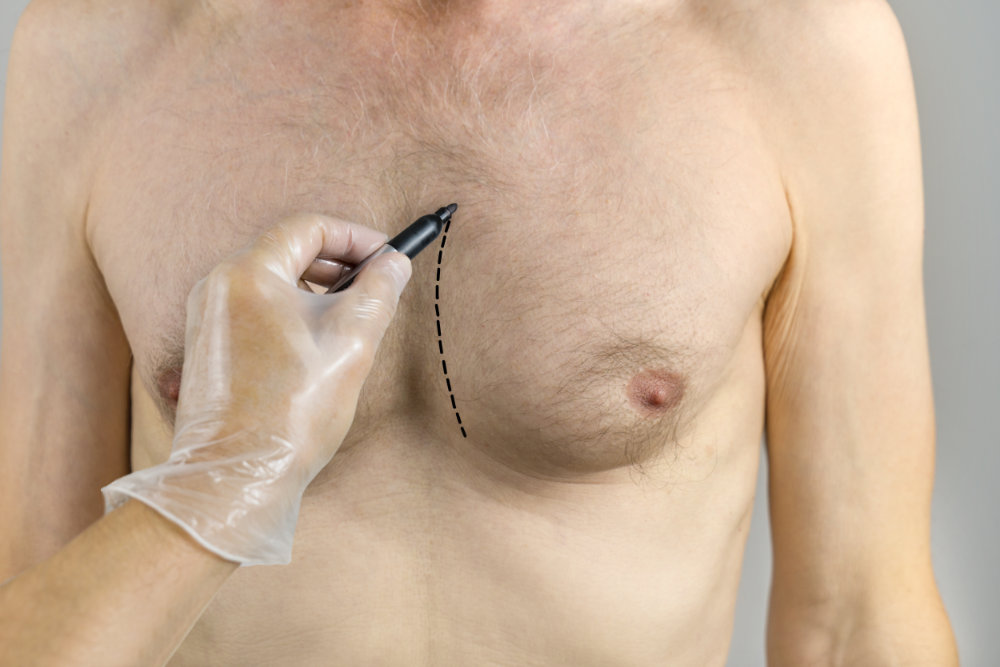
At Nuance Cosmetic Surgery in Folsom, CA, we understand that even though the majority of our patients are female, there are also cosmetic concerns that specifically affect males. One of those concerns is overgrown or enlarged breasts, and at Nuance, we offer gynecomastia surgery – a breast reduction designed for men.
Contact us today to set up a consultation with our plastic surgeon, Dr. Kenneth Sumida, and have a customized surgical plan created for you that outlines your cosmetic goals while maintaining a natural look.
What is Gynecomastia?
Men can experience overgrown or enlarged breasts at any stage in their lives. Some factors that can play a role in this medical occurrence are:
- Obesity: Extra body fat can convert testosterone into estrogen at a higher rate, which is part of why gynecomastia and simple weight gain can look similar but are not always the same condition.
- Hormonal changes: Gynecomastia often comes down to an imbalance between estrogen and testosterone, regardless of what triggered that imbalance in the first place.
- Heredity: Some men are simply more prone to developing gynecomastia due to family history, independent of weight or age.
- Puberty: Many teenage boys develop breast tissue temporarily as hormone levels swing during adolescence. In most cases, it settles on its own within a couple of years, but for some, it does not, at which point surgery becomes an option worth discussing.
- Aging: Testosterone naturally declines with age, which can allow breast tissue to develop later in life, even in men who never dealt with it when they were younger.
- Use of certain drugs: Certain blood pressure medications, anti-anxiety medications and prostate medications list gynecomastia as a side effect, as does anabolic steroid use, heavy alcohol use and marijuana use.
- Underlying health conditions: Liver, kidney or thyroid conditions can disrupt the hormonal balance that prevents breast tissue from developing in men.
Characterized by excess fat, glandular tissue, or skin, gynecomastia can affect one or both breasts. This condition can cause self-esteem issues and avoidance behavior in men but can be safely and effectively corrected with reduction surgery.
What Is Male Breast Reduction?
Male breast reduction, also called gynecomastia surgery, is a surgical procedure that removes excess fat, glandular tissue, or skin from the chest to create a flatter, more masculine contour. Unlike weight loss or chest exercises, which cannot reduce glandular tissue, surgery removes the actual tissue causing the enlargement.
What Are the Benefits of Male Breast Reduction?
Gynecomastia surgery offers more than a flatter chest. When thoughtfully planned, it can restore proportion, improve fit and support a more confident daily life. The benefits of male breast reduction include:
- A flatter, more masculine chest contour
- Reduction of excess fat, glandular tissue or skin
- Improved symmetry between the chest and torso
- Greater comfort in fitted clothing and swimwear
- Increased confidence in physical activity and social settings
- Relief from the physical discomfort some patients experience with enlarged breast tissue
- Long-lasting results with proper weight maintenance
For many patients, the physical changes also support improved body confidence and self-image.
Gynecomastia vs. Pseudogynecomastia: What Is the Difference?
Not every case of male chest enlargement is the same, and the distinction matters for how it gets treated. True gynecomastia involves actual growth of glandular breast tissue, usually triggered by a hormonal shift, and it tends to feel firm or rubbery directly beneath the nipple.
Pseudogynecomastia, on the other hand, is simply fat accumulation in the chest with no glandular growth involved, and it tends to feel soft throughout, with a texture closer to fat elsewhere on the body.
The difference is not just academic. Pseudogynecomastia often responds well to liposuction alone, since there is no dense glandular tissue to cut away. True gynecomastia usually requires direct excision of the glandular tissue, sometimes paired with liposuction to smooth the surrounding area, because that firmer tissue will not be reduced by fat removal techniques alone. Many men actually have a combination of both, which is why an in-person exam with Dr. Sumida, rather than a photo or a guess, is what determines the right surgical approach for your chest.
How Is Male Breast Reduction Performed?
Your Consultation With Dr. Sumida
Every plan starts with an exam of your chest to determine what is actually causing the enlargement. Dr. Sumida will feel for the difference between soft fatty tissue and firmer glandular tissue, check whether one side is larger than the other, and ask about your history, including any medications, supplements, or steroid use that could be contributing to the condition. This exam matters because the composition of your tissue, not just its size, determines which technique will give you the flattest, most natural result.
The Day of Surgery
A male breast reduction is done as an outpatient procedure under either general or local anesthesia. How it is performed depends on whether it is fat, glandular tissue, or excess skin that is removed from the breast area. In the cases of fat extraction, liposuction may also be used in conjunction with gynecomastia surgery.
The surgery not only flattens the breasts but also enhances chest contours, giving the area a more masculine appearance. Severe cases of gynecomastia where the breasts sag and the areola has been stretched, can also be improved with this surgery.
What Is Recovery Like?
Regardless of the procedure method, scarring after gynecomastia surgery is minimal. A dressing or compression garment is typically put over the treated areas in order to control swelling while maintaining shape and structure. Most patients can return to work within 3-7 days and resume their regular schedules in 2-3 weeks.
Doctor Sumida will inform you during your consultation about the risks and possible side effects this procedure carries, but it is normally advised not to use caution in your activities as excessive motion or force can be counterproductive to healing. Doctor Sumida will tell you what aftercare is necessary for your incision sites to minimize the risk of adverse effects.
In most cases, the results of male breast reduction are permanent. However, body weight should be maintained to uphold the integrity of the chest contours, and if the gynecomastia was caused by steroids or other types of drugs, it is also important to be free of these substances after surgery is complete.
Choosing the Right Technique For Your Chest
When Liposuction Alone Is Enough
If your gynecomastia is mostly soft, fatty tissue rather than firm glandular tissue, liposuction alone can flatten the chest with only tiny incisions and very little downtime.
When Excision Is Needed
Glandular tissue is dense and fibrous, so it must be removed by hand through a small incision, usually placed at the edge of the areola, where it heals discreetly. Most adult men with longstanding gynecomastia have at least some glandular component.
Combining Both Methods
Many patients have a mix of fat and glandular tissue, which is why liposuction and excision are frequently used together in a single procedure. This combination also allows Dr. Sumida to blend the edges of the treated area smoothly into the surrounding chest.
Addressing Loose Skin
Patients who have lost a significant amount of weight sometimes have skin that no longer has the elasticity to shrink back down on its own. In these cases, a small amount of skin may also need to be trimmed to avoid a loose or puckered appearance once the underlying tissue is gone.
Risks to Understand Beforehand
Male breast reduction has a strong safety record, but as with any surgery, it carries some risk. Dr. Sumida reviews these in detail during your consultation so nothing comes as a surprise. Possible risks include:
- Temporary or, rarely, permanent changes in nipple sensation
- Slight asymmetry between the two sides of the chest
- Small irregularities or dimpling in the treated area
- Fluid buildup beneath the skin that may need to be drained
- The possibility of a touch-up procedure if results are uneven
Weight gain after surgery is one of the most common reasons results change over time, since new fat can accumulate in the chest just as it did before, even though the original glandular tissue is gone.
Getting Ready for Surgery
A little preparation goes a long way toward a smoother procedure and recovery. Dr. Sumida will walk you through the specifics, but a few things apply to nearly every patient.
Medications and Supplements
Aspirin, ibuprofen, and similar anti-inflammatory medications thin the blood and increase bruising, so they should be paused in the weeks before surgery, along with certain herbal supplements. Dr. Sumida will give you a specific list and let you know when it is safe to start taking these again afterward.
Nicotine
Smoking and vaping restrict blood flow to healing tissue, which can slow down incision healing and raise the risk of infection. Patients are asked to stop using any nicotine products for several weeks on both sides of surgery.
General Health
Getting enough sleep, eating well and staying hydrated in the days leading up to the procedure help your body handle the procedure and heal afterward. Let our team know about any colds, fevers or new prescriptions before your surgery date so we can confirm it is still safe to proceed.
Time Away From Work and Activity
Most patients set aside about a week before returning to a desk job, longer if your work is physically demanding. Even though the surgery itself is quick, your chest needs uninterrupted time to heal without added strain.
A Ride Home and Help Afterward
Because you will be recovering from anesthesia, you will need someone to drive you home and stay with you through the first day. Having a hand with things like groceries or errands for the first day or two takes pressure off your healing chest.
Before General Anesthesia
If your procedure involves general anesthesia, you will be given a specific time to stop eating and drinking the night before. This will be reviewed in detail at your pre-operative appointment.
Is Male Breast Reduction Right For You?
Good candidates have breast tissue that has stopped changing on its own, meaning the hormonal swings of puberty have settled or that any medication-related cause has been identified and addressed. You should be in reasonably good health and have a clear idea of what you want your chest to look like afterward, since the goal is a natural, proportionate result rather than an extreme change.
Some patients come in during their late teens once a doctor confirms their gynecomastia will not resolve on its own. Others are adults dealing with tissue that developed years or decades ago, sometimes tied to past steroid use, medication changes or weight fluctuation. Dr. Sumida will examine your chest, ask about what led to the condition and help you understand whether surgery alone will deliver the result you want or whether it makes sense to pair it with another procedure.
What Does Male Breast Reduction Cost?
Pricing depends on how much tissue needs to be removed, whether liposuction, excision, or both are required, and standard facility and anesthesia fees. Because every chest is different, we do not quote a flat rate before an exam.
At your consultation, you will leave with a specific number based on your surgical plan, along with information about financing options if you would like to spread the cost. We would rather you have the full picture upfront than be surprised later.
Frequently Asked Questions About Male Breast Reduction
Does insurance pay for this?
Almost never, since gynecomastia surgery is classified as cosmetic in the vast majority of cases. If your condition causes documented pain or a medical provider has flagged it as more than cosmetic, our team can help you look into what, if anything, might apply.
Will my nipples look normal afterward?
If your areola has stretched or sits lower than it should, Dr. Sumida can adjust its size and position as part of the same surgery so it matches the new, flatter chest.
Will people be able to tell I had surgery?
The goal is a chest that looks like it was always this way, not one that looks operated on. Incisions are placed to remain hidden along natural lines, with the aim of proportion rather than an artificially flat or concave look.
Can the tissue come back?
Once glandular tissue is removed, it does not typically regrow. What can happen is new fat accumulating if your weight increases significantly, which is why maintaining your weight afterward matters more than almost anything else for keeping your result.
Why Patients Choose Nuance Cosmetic Surgery
Deciding to have this surgery is not something most men take lightly, and we do not treat it that way either. Dr. Sumida spends real time understanding what has bothered you about your chest and what you hope to see afterward, then builds a plan around your specific anatomy rather than a one-size-fits-all approach.
Our surgical center in Folsom is AAAASF-accredited, meaning it meets the same safety standards used at hospital-based outpatient facilities, in a private, unhurried setting. Dr. Kenneth Sumida is board-certified in plastic surgery and trained at UC Davis and the University of Hawaii, with years of experience specifically in body contouring procedures like this one.
Men from across the Sacramento region come to Nuance because they want a surgeon who takes the condition seriously rather than treating it as an afterthought to our other services. We want you to be confident, and for many of our patients, that starts with finally being comfortable without a shirt on.
Get Your Chest Contour Back With Personalized Male Breast Reduction
If enlarged or overgrown breast tissue has been affecting how you dress, exercise, or feel about your body, male breast reduction at Nuance Cosmetic Surgery can give you a flatter, more natural chest contour. Dr. Kenneth Sumida customizes each surgical plan based on whether your case calls for liposuction, excision or a combination of both, using the actual composition of your tissue rather than a standard template. Serving Folsom and the greater Sacramento area, our practice is built around delivering a result that looks as if it were always yours.
Contact us at Nuance Cosmetic Surgery today to schedule an appointment and start the journey to looking confident, feeling confident and being confident.